


It started with one small request. Now you're wondering how you ended up doing three times the work.
We've all heard it before.
"Hey, I've got a quick job for you."
Sounds simple enough, right?
A social media graphic. A short video edit. A few photographs. Something you can probably get done in an afternoon.
You discuss the brief, agree on a price, set a deadline and get started.
Then comes the first message.
"Actually, could we get another version?"
Sure. No problem.
Then another.
"Can we make one for Instagram Stories too?"
Okay, that makes sense.
Then suddenly, there's a request for a different format, another round of revisions, an alternative design and something the client's manager wants to try.
Before you know it, that one little project has developed a personality of its own.
And somehow, you're still getting paid for the original brief.
When a small request becomes a bigger project
There's actually a name for this: scope creep.
It's what happens when a project's requirements gradually expand beyond what was originally agreed upon, without necessarily adjusting the budget, timeline or resources.
And it doesn't always happen because a client is intentionally asking for free work.
Sometimes the brief wasn't clear enough. Sometimes new ideas come up during the creative process. Other times, additional people get involved and suddenly everyone has an opinion.
The problem isn't necessarily that a project changes. Creative work often evolves.
The problem starts when the expectations change, but the agreement doesn't.
The work you didn't account for
Let's say you agreed to design three social media posts for R1,500.
You estimated that the project would take five hours, which works out to R300 per hour before expenses.
But after the additional revisions, meetings, messages and unexpected deliverables, you've spent 12 hours on it.
That same R1,500 now works out to R125 per hour before expenses.
You haven't technically earned less money from the project, but you've spent considerably more time earning it.
And that's time you could have spent working on another project, finding new clients or simply taking a break.
For freelancers, time isn't just something you manage. It's part of what you're selling.

So, how do you handle the "one more thing" requests?
The answer isn't to become difficult or refuse every additional request.
It's about recognising when a small adjustment becomes additional work.
A few things can make that easier:
Get specific about the deliverables. Instead of agreeing to "social media content", establish how many designs, formats and revisions are included.
Put the agreement in writing. Even a clear email outlining what's included can help avoid confusion later.
Make room for changes, but not unlimited ones. A client can absolutely request something additional. That doesn't automatically mean it falls under the original price.
Have the conversation early. It's usually easier to discuss a change in scope when the request first comes up than after you've already completed the extra work.
You don't have to make it confrontational, either.
Something as simple as, "Happy to help with that! It's outside our original scope, so I'll send through an updated quote," can establish a boundary while keeping the relationship professional.
A quick job should still be a fair job
Not every project will go exactly according to plan.
Sometimes you'll underestimate the work. Sometimes a client will change their mind. Sometimes the creative process will take an unexpected turn.
That's part of freelancing.
But there's a difference between being flexible and continuously absorbing additional work without adjusting your expectations.
The next time a client asks for "just one more thing", it might be worth asking yourself whether it's really a small change or the beginning of an entirely new deliverable.
Because your time is part of the job, too.
And that "quick job" should probably stay quick.
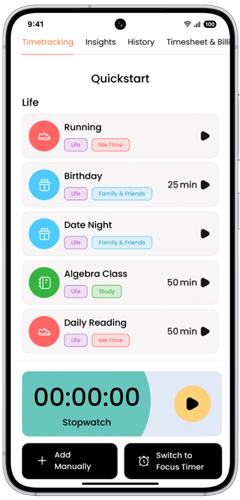
This is why we have the time-tracking tool.
That "quick job" might be taking more time than you think. With HustleNest's time-tracking tool, you can keep track of the hours you're putting into each project and get a clearer picture of where your time is going.
Because knowing what your time is worth starts with knowing where it's going.